
PRP for Knee Arthritis in Sedona, AZ: Supporting Joint Comfort and Function
Chronic knee stiffness and sharp joint pain can turn simple daily walking into an exhausting challenge. Many patients rely on temporary pain pills or repeated cortisone shots, and the stiffness still lingers. When it does, the question worth asking is what is driving the pain and whether the joint is being treated precisely.
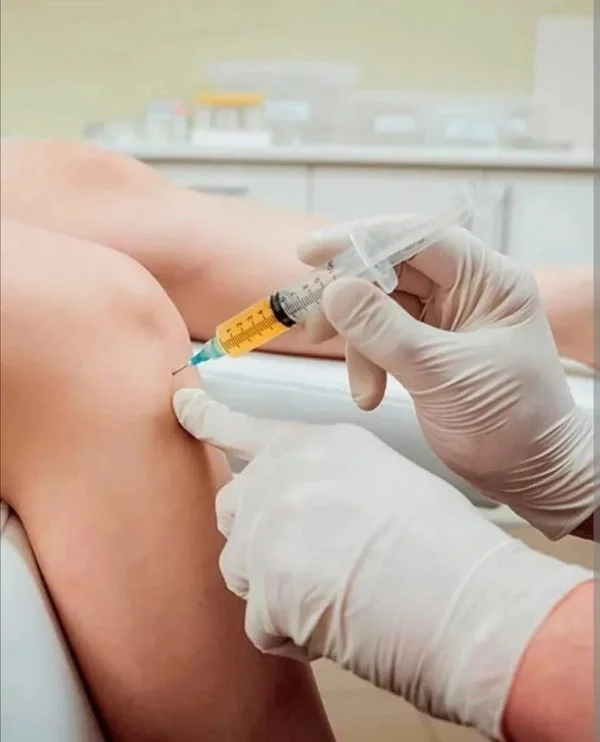
At Precision Regenerative Medicine™, Dr. Tammy Penhollow looks at the whole mechanical system behind your knee pain, not only the joint itself. Using image-guided platelet-rich plasma (PRP) injections, Sedona, AZ patients receive a concentrate prepared from their own blood, placed in the knee joint. The goal of PRP is to reduce inflammation and pain and improve function.
Why Knee Arthritis Pain Can Persist Without Focused Orthobiologic Care
Rest and anti-inflammatory pills can quiet symptoms for a time, but they do not address what is happening inside an arthritic knee, and long-term use of anti-inflammatory pills carries its own risks, including stomach irritation. A physician evaluation at Precision Regenerative Medicine™ looks at your knee alignment and soft tissue health before any biological procedure is planned.
Every plan is individualized to your evaluation and your goals, and Dr. Penhollow tracks your mobility across several months of follow-up so your plan adjusts to how your knee responds. Every procedure is performed under real-time ultrasound or fluoroscopic guidance, so the injectate is placed in the joint where it is intended to act and surrounding healthy structures are protected.
- Ultrasound or fluoroscopic evaluation to identify the structures most likely contributing to your knee pain
- Image-guided delivery so the biologic reaches the joint it is intended to treat
- Individualized care that adapts to your evaluation and your goals
- Prehabilitation guidance to strengthen the muscles around the knee
- Ongoing physician oversight by Dr. Penhollow throughout your care
PRP for Knee Arthritis in Sedona, AZ: What It Is and How It Works
Platelet-rich plasma (PRP) is made from a small sample of your own blood. Processing concentrates the platelets, which release growth factors and other signaling proteins when placed in an irritated joint. PRP does not rebuild cartilage or regenerate tissue. Its goal is to reduce inflammation and pain and improve function. Results vary from patient to patient, and no outcome can be guaranteed.
Patients from Sedona and across Arizona travel to our Scottsdale office for this care. Dr. Penhollow personally performs every procedure under real-time imaging, adjusting needle placement and angle for accuracy and patient comfort.
Calming Chronic Inflammation Inside the Knee
Ongoing inflammation contributes to pain, swelling, and morning stiffness in an arthritic knee. PRP is used with the goal of reducing that inflammatory environment, which may help slow the progression of osteoarthritis. It does not reverse structural joint damage.
Supporting Function in Weight-Bearing Tasks
By reducing pain and inflammation, PRP is used with the goal of improving how the knee handles walking, stairs, and other weight-bearing tasks. Individual response varies.
Delivering Treatment Precisely Where It Is Needed
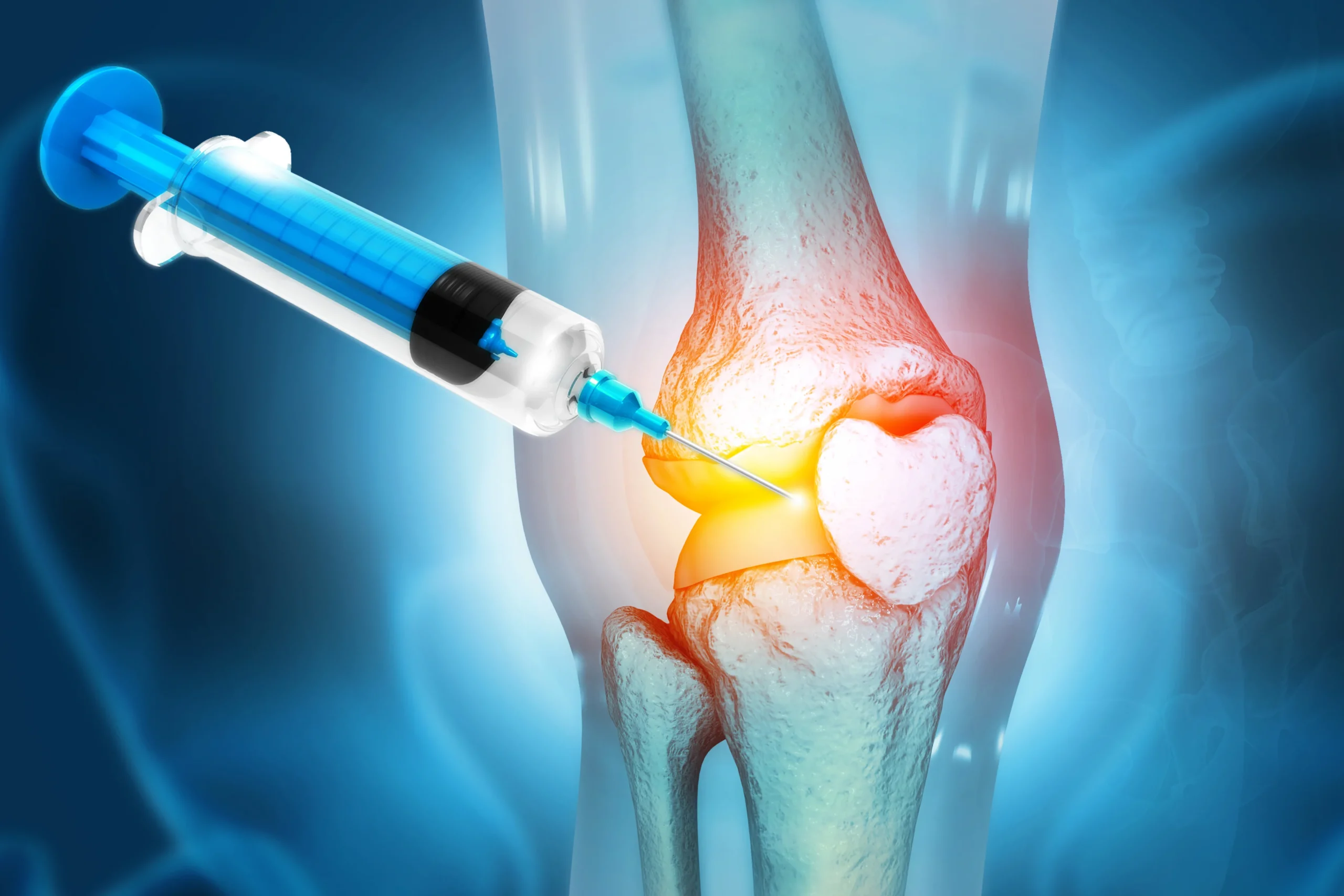
Even a well-prepared biologic depends on reaching the right place. Real-time image guidance lets Dr. Penhollow confirm placement in the joint rather than relying on landmarks alone.
Physician-Directed Knee Care in Sedona, AZ
Persistent joint wear and old sports injuries often leave the knee sensitive. A structured, physician-directed approach matters because the same imaging finding can call for very different decisions depending on the full clinical picture.
Dr. Penhollow does not use corticosteroid injections. Corticosteroids suppress the local healing response, and they are chondrotoxic, meaning they can be toxic to cartilage cells in laboratory studies. In a two-year randomized trial published in JAMA in 2017, patients with knee osteoarthritis who received repeated corticosteroid injections lost more cartilage than patients who received saline injections, without a significant difference in knee pain. PRP uses your own platelets instead. You can read more in her article on why corticosteroid injections are not as benign as patients are told: https://precisionmedprp.com/why-corticosteroid-injections-are-not-as-benign-as-youve-been-told/
- PRP prepared from your own blood (autologous), so no donor material is used
- Evaluation of the entire functional unit around the knee (the joint plus the muscles, ligaments, and tendons that load it) rather than a single isolated target
- Integration with our Joint Boost System™ to reinforce the muscles around your knee
- Structured guidance after your procedure as you return to activity
Preparing Your Knee for PRP Treatment
Our approach at Precision Regenerative Medicine™ pairs the biologic itself with preparation of the whole person. Completing targeted muscle prehabilitation before PRP for knee arthritis in Sedona, AZ helps ensure your knee is as ready as possible to respond.
Preparation focuses on quadriceps and hamstring support and on factors such as nutrition and systemic inflammation. Preparing the surrounding muscles and the body first gives the treatment the best possible setting, although outcomes vary from patient to patient.
How Our Systems of Care Support Your Knee Recovery
Many patients combine knee PRP with the practice’s systems of care, which address every muscle group supporting a painful knee.
At Precision Regenerative Medicine™, we use the Joint Boost System™ for peripheral joints like the knee and the Tower of Power Spine® system for spine conditions, including lower back problems connected to knee pain. Each is designed to support the whole kinetic chain rather than a single structure.
Within the Joint Boost System™ and the Tower of Power Spine® system, we use Emsculpt NEO®, EmVital® high intensity laser therapy, and ExoMind® to support the muscles, circulation, and neuromuscular control around the treated area.
Rebalancing Leg Mechanics Across Supporting Joints
Uneven weight distribution can put heavy strain on an arthritic knee. Prehabilitation focuses on improving leg mechanics so the joint is not exposed to constant mechanical stress.
Optimizing Metabolic Health Before and After Treatment
Nutrition and systemic inflammation influence how the body responds to any biological procedure. Preparation includes guidance on both so your body has what it needs.
Addressing Tight Soft Tissue Around the Joint
Tight calf and thigh muscles can add load across the knee. Targeted preparatory care addresses this tension to support smoother joint motion.
Who Benefits Most From Physician-Directed Knee Care?
Our practice serves active adults, working professionals, and older adults who expect a high standard from their medical care. Patients come to Precision Regenerative Medicine™ for ongoing knee stiffness, meniscus irritation, or grinding joint pain that limits daily walking.
Patients who are exploring their options before total knee replacement, or who want an alternative to long-term pain medication, are often well served by an evidence-based, image-guided approach. Dr. Penhollow explains each step so you understand how your treatment works from start to finish. For help evaluating any regenerative medicine practice, read The Patient’s Guide to Ethical Regenerative Medicine: https://precisionmedprp.com/regenerative-medicine-guide/
Dr. Tammy Penhollow, DO, is double board-certified in Anesthesiology and Pain Medicine and completed fellowship training in Pain Medicine at Stanford. She founded Precision Regenerative Medicine™ in 2019 in Scottsdale, Arizona, and chose to practice exclusively in regenerative medicine. The practice is direct pay, which keeps every treatment decision between physician and patient.
Our Comprehensive Range of Services
To support your overall mobility and structural health, Precision Regenerative Medicine™ offers these services:
Frequently Asked Questions
How does PRP for knee arthritis differ from cortisone?
Corticosteroids reduce pain by suppressing inflammation and the local healing response, and they are chondrotoxic, meaning they can be toxic to cartilage cells in laboratory studies. In a two-year randomized trial published in JAMA in 2017, repeated corticosteroid injections in knee osteoarthritis were associated with greater cartilage loss than saline injections. PRP uses your own platelets with the goal of reducing inflammation and pain and improving function. Dr. Penhollow does not use corticosteroid injections.
Is ultrasound imaging used during every knee procedure?
Yes. Dr. Penhollow uses 100 percent ultrasound or fluoroscopic guidance for every injection so the injectate is placed in the joint space.
What is recovery like after knee PRP?
Most patients resume basic daily activities within days. Returning to demanding or higher-level activity is gradual and modified, often with bracing, over weeks to months, and is guided by your physician.
Can PRP help me avoid knee replacement surgery?
Some patients explore PRP while weighing their options before knee replacement. PRP does not reverse structural joint damage, and whether it is appropriate depends on your evaluation, including the degree of arthritis. Results vary from patient to patient, and no outcome can be guaranteed.
How many PRP treatments will my knee require?
The number of treatments depends on your evaluation and your goals, and it is decided with you after your physician evaluation. Outcomes vary from patient to patient, and no result can be guaranteed.
Take the First Step Toward a More Active Routine
Precision Regenerative Medicine™ provides physician expertise, 100 percent image guidance, and a structured approach for patients who want to address chronic knee pain with care built around their own biology. If you are ready to learn whether PRP for knee arthritis is right for you, the next step is a conversation.
To reserve your initial knee evaluation with Dr. Penhollow, contact Precision Regenerative Medicine™: https://precisionmedprp.com/contactus/