
PRP Injections in Phoenix, AZ: Physician-Directed, Image-Guided Regenerative Care
Chronic joint pain, tendon injury, or persistent back pain does not have to lead directly to surgery. For appropriately selected patients, image-guided PRP injections in Phoenix, AZ can support the body’s own repair biology, address the inflammatory environment that drives pain, and help patients avoid or delay procedures they hoped to postpone. What determines the outcome is not the injection itself. It is the evaluation, the tool selection, the image guidance, and the surrounding clinical system that determines whether the biology has a fair chance to work.
About the Physician Behind This Page
I am Dr. Tammy J. Penhollow, DO, dual board-certified in Anesthesiology and Pain Medicine and Stanford fellowship-trained in interventional spine and pain. I left insurance-based medicine in 2015 to practice exclusively in regenerative medicine, and I founded Precision Regenerative Medicine™ in Scottsdale, Arizona in 2018. My practice is exclusively autologous, direct pay, and 100 percent image-guided. I personally perform every evaluation and every procedure. Patients travel to my Scottsdale office from throughout Arizona, across the Southwest, and internationally when they can travel to Phoenix.
What PRP Actually Is
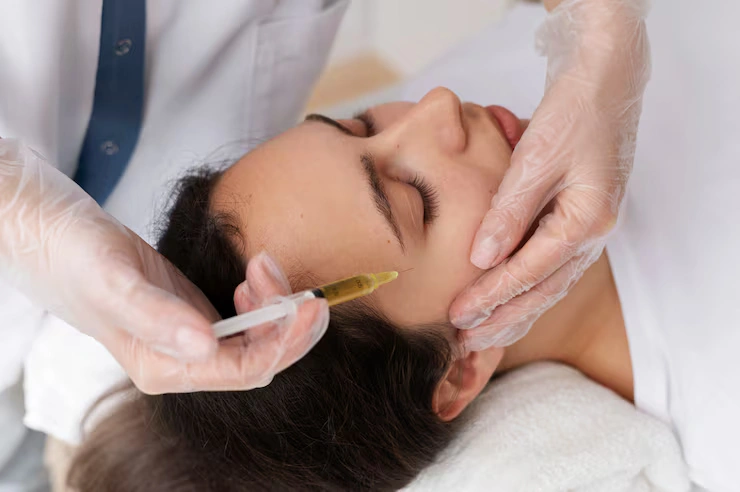
Platelet-rich plasma (PRP) is a concentrated preparation of your own blood platelets, processed on-site and delivered directly to the target tissue under image guidance. Platelets carry the biological signaling factors that direct tissue repair. When PRP is placed accurately into a structure that is biologically capable of responding, it can support meaningful improvement in pain and function.
PRP is one of two primary autologous tools I use. The other is bone marrow aspirate concentrate (BMAC), which is drawn from the iliac crest under image guidance and processed to concentrate the cellular components. PRP and BMAC have different clinical applications, and matching the right tool to the right presentation is what separates regenerative medicine done well from regenerative medicine delivered as a stand-alone procedure.
When PRP Is the Right Tool, and When It Is Not
At Precision Regenerative Medicine™, PRP has appropriate clinical application in earlier-stage joint conditions and in certain soft tissue presentations, including select tendon and ligament conditions of the knee, shoulder, elbow, hip, and spine.
For more advanced joint conditions and certain structural presentations, BMAC is often the more appropriate tool, and can be delivered both intra-articularly and intraosseously into the subchondral bone.
Which tool fits your situation, whether either fits, and whether regenerative care is the right approach for you at all depends on your full clinical picture. That determination requires an evaluation, not an assumption based on your MRI report or your search for the treatment you already have in mind.
I do not use corticosteroids under any circumstances. Repeated intra-articular and peritendinous corticosteroid injections have documented effects on cartilage integrity and tendon quality. If you want to understand more about that decision, our earlier article on corticosteroid effects covers the mechanisms in detail.
How PRP Fits Within Our Clinical Systems
Regenerative injection is one component of care at Precision Regenerative Medicine™, not the whole of it. Every regenerative treatment I perform is part of a broader physician-directed system:
For the knee, shoulder, and other peripheral joints, the framework is the Joint Boost System™, which integrates prehabilitation, physician-selected regenerative treatment, and structured post-procedural care under one physician-directed plan.
For the spine, the framework is Tower of Power Spine®, which treats the entire functional spinal unit as an integrated system rather than chasing pain from one structure to the next.
Both systems share the same clinical philosophy. The biology of regenerative treatment cannot repair what the surrounding system cannot support, which is why prehabilitation, image guidance, and structured post-procedural care are required components, not optional add-ons.
Image Guidance Is the Standard, Not the Premium
Every regenerative procedure I perform is 100 percent image-guided. This means ultrasound for soft tissue and superficial joint targets, and fluoroscopy for spinal and intraosseous targets. Not some procedures. Not most procedures. Every procedure.
Placement accuracy is the single variable that determines whether a treatment reaches its intended target. The evidence on landmark-based versus image-guided injection accuracy is clear across multiple joint targets, and for smaller or anatomically variable structures, the difference is substantial. This is why blind injections are not part of my practice.
Prehabilitation Is the Clinical Threshold
Before I treat with orthobiologics, my patients complete a required clinical threshold I call prehabilitation. This is a structured system with multiple domains that determine whether the treatment biologically holds:
- Mechanical stabilization and strengthening of the muscles supporting the affected structure
- Metabolic optimization, including nutrition, blood sugar regulation, and vitamin status
- Tissue preparation to reduce systemic inflammatory load
- Pre-procedural diagnostic optimization to confirm the treatment plan is targeting the right structures
- Central regulation of sleep, stress, and recovery capacity
FDA-cleared technology, including Emsculpt NEO® for muscle stabilization and ExoMind® for central regulation, is part of the prehabilitation framework when the clinical picture warrants it.
Who Is a Candidate?
Appropriate candidates for PRP or other regenerative treatment typically have:
- A clinical picture that regenerative biology can meaningfully address, based on the whole evaluation
- Structural changes that have not caused irreversible functional loss requiring reconstruction
- A goal of remaining active without long-term reliance on oral pain medication or corticosteroid injections
- No active infection, blood disorder, or other condition that would make regenerative therapy inappropriate
A proper evaluation is the only way to determine both candidacy and which approach fits your presentation. Not every patient who presents to my office is a candidate for regenerative care. When someone is not, I tell them directly and refer them to the care that fits their situation.
What to Expect at a Consultation Visit?
A thorough evaluation at Precision Regenerative Medicine™ typically includes:
- Review of your imaging, including X-rays, MRI, or ultrasound if available
- My own diagnostic ultrasound assessment of the affected structures
- A hands-on functional exam
- A conversation about your goals, whether returning to a specific sport, resuming professional demands, or simply moving through daily life without pain
- A clear explanation of every option on the table, including when regenerative treatment is unlikely to be the right fit
- If regenerative care is appropriate, an explanation of which approach matches your clinical picture and why
Precision Regenerative Medicine™ is a direct pay practice. We do not participate in insurance panels. Fees are quoted after a full evaluation, so any recommendation reflects your specific clinical picture rather than a menu of procedures.
Realistic Expectations About Recovery
Recovery from any regenerative treatment is gradual because the goal is to support your body’s own healing biology rather than provide instant symptom suppression. Most patients return to basic daily activities such as walking, driving, sitting at a desk, and working within a few days, though soreness at the injection site is common in the first week. Return to more demanding activity, including gym training, sports, and higher-impact movement, is more gradual and typically involves activity modification and often bracing for weeks to months while the biology does its work.
A structured return-to-activity plan is part of the post-procedural care I build with every patient. What you do in the weeks and months after treatment matters as much as the treatment itself.
Our Specialized Services
For patients throughout Arizona and beyond, Precision Regenerative Medicine™ offers a focused range of physician-directed regenerative services:
- PRP treatment in Phoenix, AZ: Image-guided platelet-rich plasma therapy for appropriate joint, tendon, and soft tissue conditions
- BMAC in Phoenix, AZ: Bone marrow aspirate concentrate for more advanced joint conditions and specific structural presentations, delivered both intra-articularly and intraosseously
- PRP for knee arthritis in Phoenix, AZ: Regenerative care for the knee within the Joint Boost System™ framework
- PRP for shoulder pain in Phoenix, AZ: Regenerative care for the shoulder within the Joint Boost System™ framework
- Back pain relief in Phoenix, AZ: Comprehensive spinal care using the Tower of Power Spine® framework
- ExoMind® therapy: FDA-cleared central regulation for executive reset, brain fog, and performance optimization, used within our clinical systems
Frequently Asked Questions
What is the difference between PRP and cortisone injections?
Cortisone is a symptom-suppressive treatment that can reduce inflammation temporarily. Repeated corticosteroid injections have documented effects on tendon integrity, including increased risk of tendon rupture, and on cartilage integrity, including accelerated cartilage loss and progression of osteoarthritis. PRP takes a different approach entirely. It harnesses your body’s own reparative and anti-inflammatory factors to support reduction in pain and improvement in function, without the tissue-degrading effects associated with repeated corticosteroid use. I do not use corticosteroids under any circumstances at Precision Regenerative Medicine™.
How long does a PRP procedure take?
Plan on approximately 60 to 90 minutes for the appointment, which includes the blood draw, on-site processing, imaging setup, and the image-guided procedure itself.
Is PRP the right regenerative treatment for every joint or spine condition?
No. PRP has appropriate clinical application in certain presentations. BMAC has appropriate clinical application in others. For some ligament and muscle conditions I use additional tools such as prolotherapy, platelet-poor plasma, or bone marrow aspirate plasma. Which approach fits your situation, or whether regenerative care is the right approach at all, requires a full evaluation of your history, imaging, examination, comorbidities, and goals.
Does insurance cover PRP injections?
Precision Regenerative Medicine™ is a direct pay practice. We do not participate in insurance panels. Fees are quoted after a full evaluation, so any recommendation reflects your specific clinical picture rather than a menu of procedures. This model exists because insurance-based regenerative medicine typically cannot support the clinical rigor these treatments require.
How soon can I return to activity after a PRP procedure?
Most patients return to basic daily activities within a few days, though soreness at the injection site is common in the first week. Return to more demanding activity, including gym training, sports, and higher-impact movement, is more gradual and typically involves activity modification and often bracing for weeks to months. Your specific timeline depends on the treated structures, the severity of the underlying condition, your baseline activity level, and how well you have prepared for the procedure.
Do you use image guidance for every procedure?
Yes. Every regenerative procedure at Precision Regenerative Medicine™ is 100 percent image-guided, using ultrasound for soft tissue and superficial joint targets and fluoroscopy for spinal and intraosseous targets. Blind injections are not part of my practice.
Start Your Evaluation at Precision Regenerative Medicine™
If you are considering your options for chronic joint or spine pain, tendon or ligament injury, or non-surgical care in the Phoenix and Scottsdale area, I welcome the opportunity to evaluate your clinical picture and, if you are a candidate, determine which approach fits your presentation.