
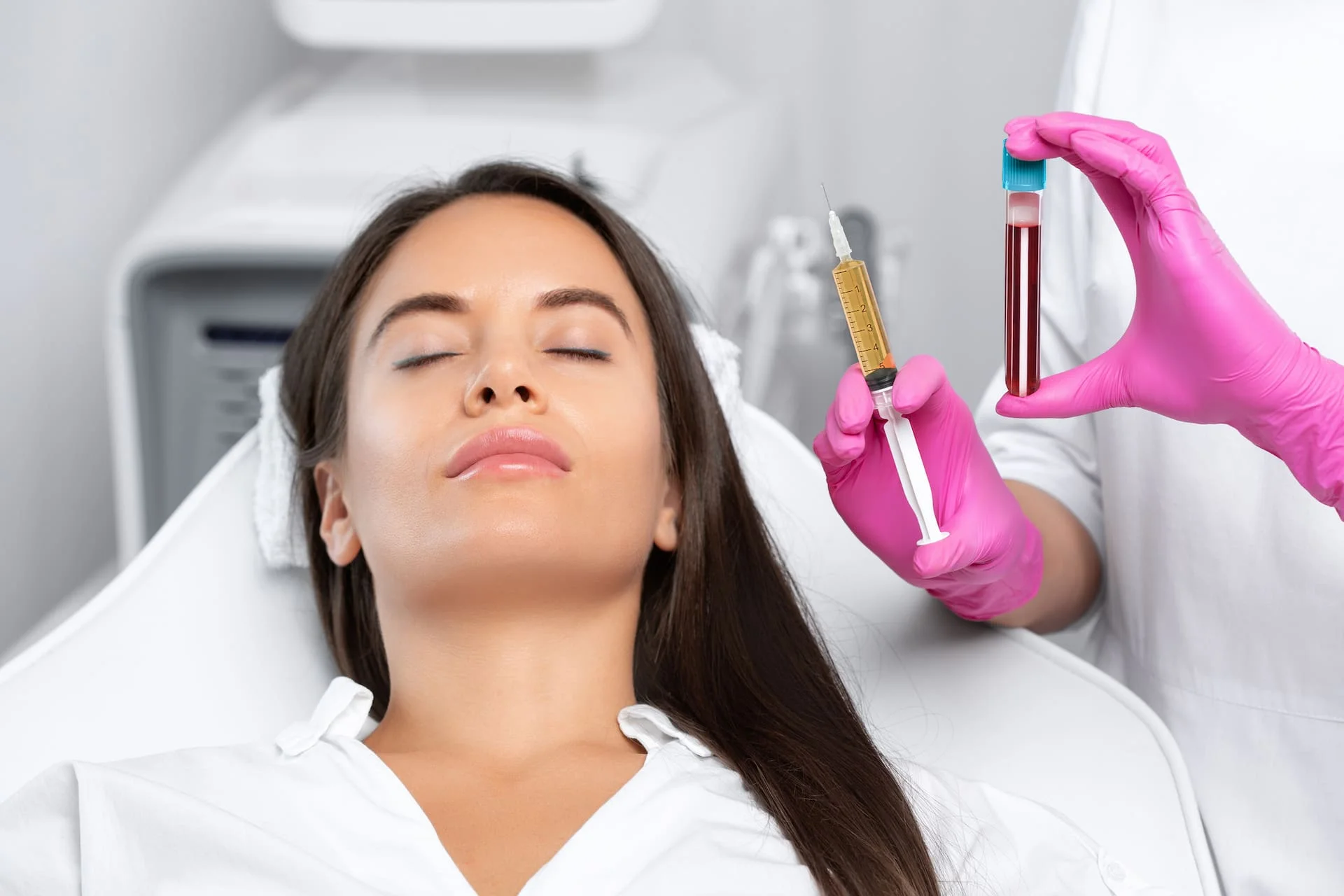
What Is Actually in Your PRP or Stem Cell Injection
The words “PRP” or “stem cell therapy” on a chart say very little about what was in the syringe. Two patients can receive treatments with the same name and receive very different biology, depending on where the material came from, how much blood was drawn, how it was processed, and whether anyone measured the result.
This article explains the factors that determine injectate quality, so you know what to ask before you agree to any regenerative procedure. It is written for patients who have already learned that PRP exists and now want to know whether what they would receive is any good.
This article was written by Dr. Tammy J. Penhollow, DO, who is double board-certified in Anesthesiology and Pain Medicine and completed fellowship training in Pain Medicine at Stanford. She founded Precision Regenerative Medicine™ in 2019 in Scottsdale, Arizona, and chose to practice exclusively in regenerative medicine. The practice is direct pay, which keeps every treatment decision between physician and patient.
Your Own Cells Versus Commercial Birth Tissue Products
The first question is where the material came from. An autologous product is made from your own blood or bone marrow. A commercial birth tissue product, such as an amniotic fluid or umbilical cord preparation, is made from donated tissue and sold in a vial.
The published concern is about viability. In a study of commercial amniotic fluid products published in the American Journal of Sports Medicine in 2019, nucleated cells were found in two of the three products tested, but most of those cells were dead, the few living cells did not behave like mesenchymal stem cells, and mesenchymal stem cells could not be identified in any commercial product. The authors concluded that the products studied should not be considered stem cell therapies.
That study tested three products, so it does not describe every product on the market. It does show why the label on the vial is not the same as proof of what is inside. Dr. Penhollow uses only autologous biologics, meaning they come from your own body.
Six Factors That Determine Autologous Injectate Quality
1. Blood Draw Volume
Concentration cannot be created from nothing. A small draw limits how many platelets are available to concentrate. As a general framework, a draw of at least 60 mL is a reasonable minimum for a small joint, 120 mL for a large joint or the spine, and 120 mL for bone marrow. A 20 mL draw may not supply enough starting material for a meaningful dose in a larger joint.
2. Platelet Recovery
Platelet recovery is the percentage of the platelets in your drawn blood that end up in the final injectate. It is calculated by dividing the platelet dose in the final product by the total platelets in the starting blood. Recovery varies widely between systems. Lower-tier systems may recover about 30 percent, while higher-tier systems can reach 80 to 90 percent. The same blood draw can therefore produce very different doses depending on the system used.
3. Your Baseline Platelet Count
Platelet counts differ from person to person, and your own starting count affects how much blood is needed to reach a given dose. A fixed, one-size-fits-all draw is therefore worth asking about.
4. Kit Type and Processing
Systems differ in how they separate blood. Dr. Penhollow uses a closed double-spin system and does not use gel separator tubes, because platelets can become trapped in the gel layer during centrifugation, which lowers the final yield. In a published evaluation of kit performance, the authors note that some low-efficiency kits can yield less than 1 billion platelets and that some kits inconsistently produce anywhere from 2 cc to 6 cc of PRP from the same blood volume input. Processing is part of the product.
5. Cell Composition
Blood contains platelets, red cells, and several types of white cells, including monocytes, lymphocytes, and neutrophils. The mix in the final injectate differs between systems and protocols. Dr. Penhollow’s approach favors optimizing monocytes while limiting extra red cells and neutrophils in the final product. The practical point for you is that a kit can be measured for these components, and the result should not be a mystery.
6. Measuring What Is Delivered
For PRP, this means a platelet count, volume, and recovery that can be calculated from the final product. For bone marrow procedures, it means analysis of the concentrate. TNCC is the total nucleated cell count, and CFU analysis (colony-forming unit assays) tests how many of the cells can form colonies in culture. Dr. Penhollow sends a specimen from every bone marrow case to an independent laboratory for this analysis, so that what is delivered has been measured and not assumed.
Why Platelet Dose Matters
In a 2021 randomized trial in Scientific Reports, 150 patients with moderate knee osteoarthritis received either PRP prepared to contain 10 billion platelets or hyaluronic acid injections. At one year, the PRP group had better scores on the WOMAC and IKDC knee measures and a longer pain-free walking distance. The authors concluded that an absolute count of 10 billion platelets is important for a sustained effect. This trial tested a single PRP dose against hyaluronic acid, it did not compare different doses, and the authors note that further studies are needed.
The practical lesson is that “PRP” is not one product. The dose in the syringe is a variable, and it is reasonable to ask what it was. Results vary from patient to patient, and no outcome can be guaranteed.
What PRP Is and Is Not
PRP does not rebuild or regenerate tissue. Its goal is to reduce inflammation and pain, support the healing environment, and improve function. It is not a substitute for surgery when surgery is clinically indicated, such as for a full-thickness tendon tear. A well-prepared injectate improves the quality of what is delivered. It does not change what PRP is able to do.
What an Evaluation at Precision Regenerative Medicine™ Includes
Patients who come to Precision Regenerative Medicine™ receive a physician evaluation before any procedure is planned. Dr. Penhollow’s evaluation covers:
- Review of musculoskeletal history and prior injections, including how long any relief lasted
- Diagnostic ultrasound of tendons, joint capsules, and joint fluid
- Assessment of joint mechanics, muscular deficits, and systemic factors that affect biological readiness
- Physician-directed prehabilitation through the Joint Boost System™ for joint and extremity conditions and the Tower of Power Spine® system for spine conditions
- Use of autologous biologics only, prepared with the factors above in mind
- Real-time ultrasound or fluoroscopic guidance for every procedure, so the injectate is placed at the intended target
Frequently Asked Questions
What is actually in a PRP injection?
PRP is made from a sample of your own blood. Processing concentrates the platelets, and the final injectate also contains plasma and a variable mix of other blood cells. How many platelets it contains, and what else, depends on the draw volume, your baseline platelet count, and the system used.
How do I evaluate PRP kit quality?
Ask how much blood is drawn, what percentage of platelets the system recovers, whether it uses a double-spin or gel separator design, and whether the final platelet count and volume are measured. A published checklist for evaluating kits includes platelet count, recovery, white cell content, output consistency, and cost per billion platelets.
What is the difference between birth tissue and autologous stem cell products?
Autologous products come from your own body. Birth tissue products come from donated tissue and are sold in vials. Published concerns have been raised about the viability of cells in commercial birth tissue products, so it is reasonable to ask for viability data on the specific product being offered.
Does a higher platelet count always mean a better result?
No. Dose is one variable among several, including cell composition, the condition being treated, and your biological readiness. Results vary from patient to patient.
What questions should I ask before agreeing to PRP or a stem cell injection?
Three questions cover most of what matters, and they are listed below.
Three Questions to Ask Before Any Regenerative Procedure
- What exactly is in the syringe, and where did it come from?Ask whether it is made from your own blood or bone marrow, and if it is a commercial product, ask for the viability data on that specific product.
- How much blood is drawn, and how is it processed?Ask the draw volume, the kit or system type, and the expected platelet recovery.
- Is the final product measured, and can I see the numbers?Ask whether the platelet count and volume, or for bone marrow the nucleated cell count and colony-forming analysis, are measured and reviewed with you.
A Final Note
A regenerative injection is a medical procedure, and the quality of what goes into the syringe is a legitimate part of informed consent. These questions belong in the conversation before a needle touches your joint or spine, and a physician who welcomes them is one worth listening to.
Dr. Tammy J. Penhollow evaluates knee, hip, shoulder, elbow, and spine conditions at Precision Regenerative Medicine™. For help evaluating any regenerative medicine practice, read The Patient’s Guide to Ethical Regenerative Medicine: https://precisionmedprp.com/regenerative-medicine-guide/
To request an initial evaluation, complete the contact form at https://precisionmedprp.com/contactus/, and Dr. Penhollow’s office will follow up with you directly.