
PRP Injections in Sedona, AZ: Supporting the Healing Environment for Joints and Tendons
Persistent joint pain and stubborn tendon stiffness can make ordinary routines feel like an uphill battle. Many patients rest, or take pain medication repeatedly, and still find the aching lingers. When pain persists, the question worth asking is what is driving it and whether the tissue involved is being treated precisely.
At Precision Regenerative Medicine™, Dr. Tammy Penhollow looks at the whole system behind your pain, not only the spot that hurts. Using image-guided platelet-rich plasma (PRP) injections, Sedona, AZ patients receive a concentrate prepared from their own blood, placed at the joint or tendon involved. The goal of PRP is to reduce inflammation and pain, support the healing environment, and improve function.
Why Joint and Tendon Pain Can Persist Without Focused Orthobiologic Care
Rest and anti-inflammatory medication can quiet symptoms for a time, but they do not address what is happening inside an injured tendon or an arthritic joint, and long-term use of anti-inflammatory pills carries its own risks, including stomach irritation. A physician evaluation at Precision Regenerative Medicine™ looks at joint integrity and local tissue health before any biological procedure is planned.
Every plan is individualized to your evaluation and your goals. Every procedure is performed under real-time ultrasound or fluoroscopic guidance, so the injectate is placed where it is intended to act and surrounding healthy structures are protected.
- Ultrasound or fluoroscopic evaluation to identify the structures most likely contributing to your pain
- Image-guided delivery so the biologic reaches the tissue it is intended to treat
- Individualized care that adapts to your evaluation and your goals
- Prehabilitation guidance to prepare the muscles and mechanics around the joint
- Ongoing physician oversight by Dr. Penhollow throughout your care
Platelet-Rich Plasma (PRP) Injections in Sedona, AZ: What They Are and How They Work
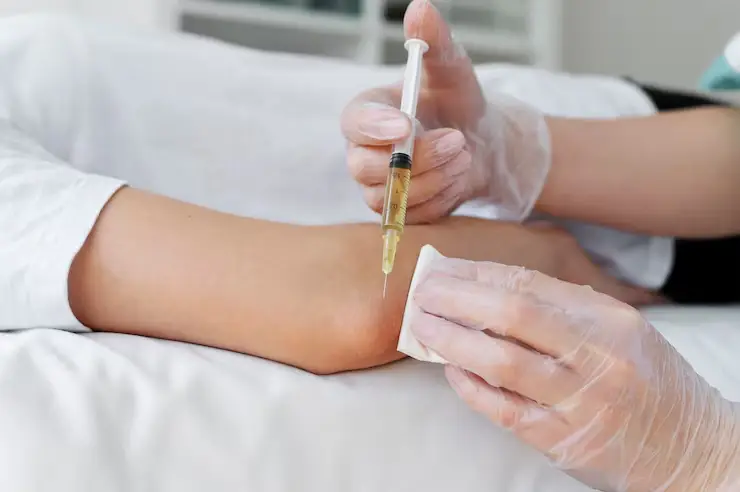
Platelet-rich plasma (PRP) is made from a small sample of your own blood. Processing concentrates the platelets, which release growth factors and other signaling proteins when placed at an injured tendon or an irritated joint. PRP does not rebuild or regenerate tissue. Its goal is to reduce inflammation and pain, support the healing environment, and improve function. Results vary from patient to patient, and no outcome can be guaranteed.
Dr. Penhollow personally performs every procedure under real-time imaging, adjusting needle placement and angle for accuracy and patient comfort.
Supporting the Healing Environment Around Injured Tendons
Concentrated platelets deliver signaling proteins to the area around an injured tendon, with the goal of supporting the healing environment and reducing pain. PRP is not a substitute for surgery when surgery is clinically indicated, such as for a full-thickness tear, and part of your evaluation is determining which situation you are in.
Calming Chronic Inflammation Inside the Joint
Ongoing inflammation contributes to pain and stiffness in an arthritic joint. PRP is used with the goal of reducing that inflammatory environment, which may help slow the progression of osteoarthritis. It does not reverse structural joint damage.
Delivering Treatment Precisely Where It Is Needed
Even a well-prepared biologic depends on reaching the right place. Real-time image guidance lets Dr. Penhollow confirm placement at the target tissue rather than relying on landmarks alone.
Physician-Directed PRP Care Built Around Your Own Biology
Chronic sports injuries and age-related joint wear can leave tissue irritated and sensitive. A structured, physician-directed approach matters because the same imaging finding can call for very different decisions depending on the full clinical picture.
Dr. Penhollow does not use corticosteroid injections. Corticosteroids suppress the local healing response, which works against the goal of supporting tissue healing, so PRP uses your own platelets instead. You can read more in her article on why corticosteroid injections are not as benign as patients are told: https://precisionmedprp.com/why-corticosteroid-injections-are-not-as-benign-as-youve-been-told/
- PRP prepared from your own blood (autologous), so no donor material is used
- Evaluation of the entire functional unit around the joint (the joint plus the muscles, ligaments, and tendons that load it) rather than a single isolated target
- Integration with our Joint Boost System™ to support the muscles around treated joints
- Structured guidance after your procedure as you return to activity
Preparing Your Body for PRP Treatment
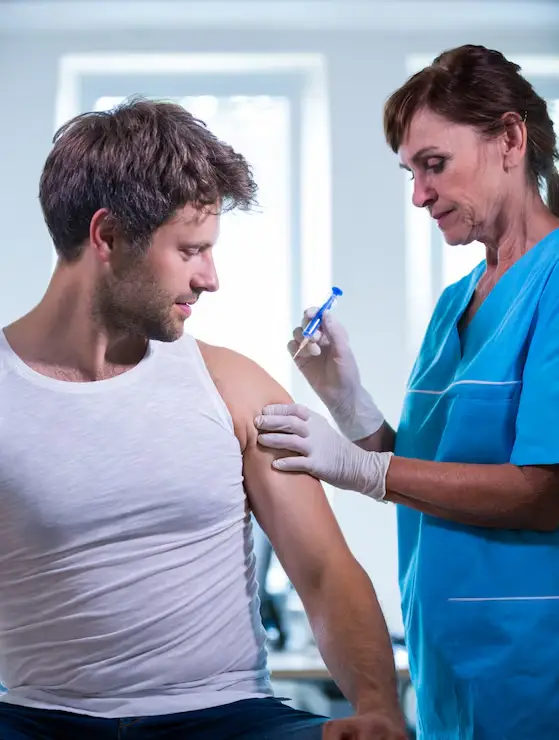
Our approach at Precision Regenerative Medicine™ pairs the biologic itself with preparation of the whole person. Completing targeted prehabilitation before PRP treatment helps ensure your body is as ready as possible to respond.
Preparation focuses on muscle stability and on factors such as nutrition and systemic inflammation. Preparing the surrounding tissues and the body first gives the treatment the best possible setting, although outcomes vary from patient to patient.
How Our Systems of Care Support Your Recovery
Many patients combine PRP with the practice’s systems of care, which address every component around a painful joint.
At Precision Regenerative Medicine™, we use the Joint Boost System™ for joint and extremity conditions and the Tower of Power Spine® system for spinal conditions. Each is designed to support the whole kinetic chain rather than a single structure.
Within the Joint Boost System™ and the Tower of Power Spine® system, we use Emsculpt NEO®, EmVital® high intensity laser therapy, and ExoMind® to support the muscles, circulation, and neuromuscular control around the treated area.
Rebalancing Forces Across Supporting Joints
Unbalanced movement patterns can overload an injured ligament or tendon. Prehabilitation focuses on improving mechanics so the joint is not exposed to constant mechanical strain.
Optimizing Metabolic Health Before and After Treatment
Nutrition and systemic inflammation influence how the body responds to any biological procedure. Preparation includes guidance on both so your body has what it needs.
Addressing Restrictive Soft Tissue Tension
Tight muscle bands can load tendon attachments and contribute to ongoing discomfort. Targeted preparatory care addresses this tension to support smoother joint motion.
Who Benefits Most From Physician-Directed Regenerative Care?
Our practice serves active adults, working professionals, and athletes who expect a high standard from their medical care. Patients come to Precision Regenerative Medicine™ for chronic knee stiffness, rotator cuff irritation, elbow pain, and lingering spinal discomfort.
Patients who are exploring their options before joint replacement, or who want an alternative to long-term medication, are often well served by an evidence-based, image-guided approach. Dr. Penhollow explains each step so you understand how your treatment works from start to finish. For help evaluating any regenerative medicine practice, read The Patient’s Guide to Ethical Regenerative Medicine: https://precisionmedprp.com/regenerative-medicine-guide/
Dr. Tammy Penhollow, DO, is double board-certified in Anesthesiology and Pain Medicine and completed fellowship training in Pain Medicine at Stanford. She founded Precision Regenerative Medicine™ in 2018 in Scottsdale, Arizona, and chose to practice exclusively in regenerative medicine. The practice is direct pay, which keeps every treatment decision between physician and patient.
Our Comprehensive Range of Services
To support your long-term mobility and structural health, Precision Regenerative Medicine™ offers these services:
Frequently Asked Questions
What makes PRP different from corticosteroid injections?
Corticosteroids reduce pain by suppressing inflammation and the local healing response, which works against the goal of supporting tissue healing. PRP uses your own platelets with the goal of reducing inflammation and pain and supporting the healing environment. Dr. Penhollow does not use corticosteroid injections.
Is image guidance used for every procedure at Precision Regenerative Medicine™?
Yes. Dr. Penhollow uses 100 percent ultrasound or fluoroscopic guidance for every procedure so the injectate is placed at the intended target.
What is recovery like after treatment?
Most patients resume basic daily activities within days. Returning to demanding or higher-level activity is gradual and modified, often with bracing, over weeks to months, and is guided by your physician.
Why does Precision Regenerative Medicine™ not use donor birth tissue products?
Published concerns have been raised about the cell viability of commercial donor birth tissue products. Dr. Penhollow uses only autologous biologics, meaning they come from your own body.
How many treatments are generally needed?
Published concerns have been raised about the cell viability of commercial donor birth tissue products. Dr. Penhollow uses only autologous biologics, meaning they come from your own body.
Take the First Step With a Physician Evaluation
Precision Regenerative Medicine™ provides physician expertise, 100 percent image guidance, and a structured approach for patients who want to address chronic joint or spine pain with care built around their own biology. If you are ready to learn whether PRP is right for you, the next step is a conversation
To reserve your private evaluation with Dr. Penhollow, contact Precision Regenerative Medicine™: