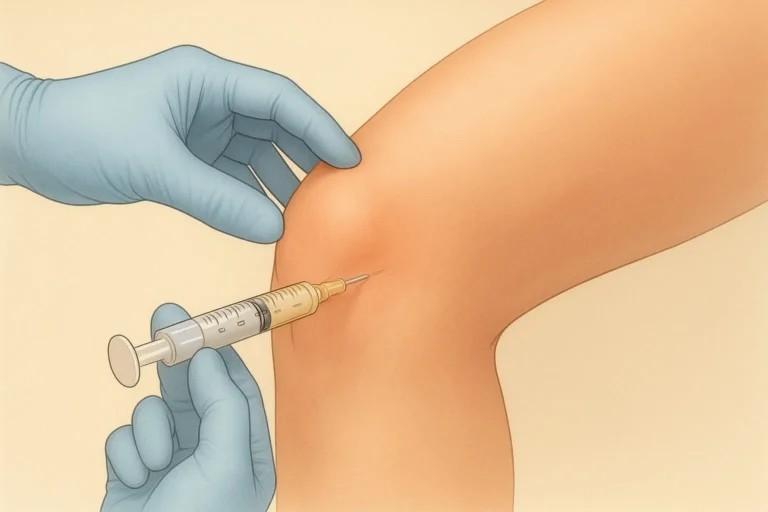

How to Evaluate a Regenerative Medicine Physician: The Questions That Separate Clinical Standards from Marketing?
Regenerative medicine is a fragmented field. Clinical standards vary dramatically between practices, and patients evaluating their options are typically unable to distinguish physician-owned, high-standards care from vendor-driven, protocol-based, undifferentiated service. The marketing looks similar. The websites look similar. The outcomes are not similar.
This gap between how regenerative practices present themselves and what they actually deliver is the reason patients who have already tried PRP or BMAC elsewhere frequently arrive at Precision Regenerative Medicine™ describing minimal or short-lived results. In most of these cases, the biology was competent. The system around it was not.
The purpose of this article is to give patients a physician-authored framework for evaluating regenerative medicine practices before treatment. Eight questions. Direct answers about what to look for. No marketing.
Physician Authorship
I am Dr. Tammy J. Penhollow, DO. I am dual board-certified in Anesthesiology and Pain Medicine, Stanford fellowship-trained in interventional spine and pain, and I have practiced exclusively in direct pay regenerative spine and joint medicine since 2015. I founded Precision Regenerative Medicine™ in Scottsdale, Arizona in 2018. I do not use corticosteroids. I do not perform blind injections. Every procedure is autologous, every procedure is image-guided, and every patient completes a physician-directed rehabilitation protocol before any biologic intervention is delivered.
I wrote this article because patients deserve a framework for evaluating regenerative medicine practices that is not written by the practices themselves. What follows is the framework I would want a member of my own family to use before selecting a physician for regenerative care.
Eight Questions to Ask Before Any Regenerative Treatment
1. Is the physician performing the procedure themselves, or delegating to allied staff?
In many higher-volume regenerative practices, the physician performs the initial consultation and then delegates the actual injection to a physician assistant, nurse practitioner, or other allied health care professional. This is not necessarily inappropriate for straightforward interventions, but it is a meaningful distinction that patients rarely learn about until treatment day.
For regenerative procedures involving image guidance, tissue-specific dosing, and real-time judgment about needle path and delivery, the physician’s hands and clinical decision-making during the procedure are part of what the patient is purchasing. Ask directly: will the physician be performing the procedure, or will it be delegated? Both answers can be legitimate, but the patient should know which they are agreeing to.
2. Is the tissue autologous, or does the practice use amniotic, umbilical, or exosome products?
Autologous tissue comes from the patient’s own body: blood for PRP, bone marrow for BMAC, or adipose in some applications. It is regulated appropriately, carries no infectious disease risk from another donor, and does not require the immune considerations of donor tissue.
Amniotic and umbilical products marketed as “stem cell” therapy are birth tissue products. The FDA has issued clear guidance limiting their appropriate use, and many practices continue to market them in ways that exceed what the science and regulation actually support. Exosome products are similarly outside the current regulatory framework for clinical practice in most cases. A patient who is being offered these products deserves a candid conversation about what they are, what the regulatory posture actually is, and what the evidence base supports. Practices that offer autologous tissue exclusively have made a clinical and regulatory decision that patients should understand.
3. Are corticosteroids offered, mixed into biologic preparations, or recommended as a step before regenerative care?
Corticosteroids are chondrotoxic to cartilage cells, disrupt tendon collagen organization, contribute to bone metabolism changes, elevate blood glucose, suppress the hypothalamic-pituitary-adrenal axis, and produce local tissue atrophy. These effects are documented, dose-dependent, and frequency-dependent.
A regenerative practice that also offers corticosteroids, or that mixes small amounts of corticosteroid into biologic preparations, is operating under a clinical philosophy that is fundamentally different from a practice that has removed corticosteroids from the treatment options entirely. Neither posture is illegal. They are different clinical standards. A patient evaluating a practice should know which one they are working with, and why.
4. Are all injections image-guided under ultrasound or fluoroscopy, or are landmark injections used?
Landmark injections estimate placement based on surface anatomy. Image-guided injections use ultrasound or fluoroscopy to directly visualize the target structure, the needle, and the delivery of the injectate. Published systematic review data comparing the two techniques demonstrate significant accuracy differences at the acromioclavicular joint, biceps tendon sheath, glenohumeral joint, and other targets.
Accuracy is not a technical footnote. It is the difference between the biology reaching its intended target and missing it entirely. For any injection where the target is small, deep, or anatomically variable, image guidance should be the standard rather than the exception. Ask specifically whether all procedures are image-guided, or whether guidance is used only for selected structures.
5. What is the platelet dose being delivered, and what is the clinical rationale for it?
PRP is not one product. The term describes a category of preparations that vary dramatically in platelet concentration, growth factor content, and biological output. The published clinical target for intra-articular knee treatment is 10 billion platelets. Achieving this dose depends on both the blood draw volume and the platelet recovery capability of the preparation system used.
Practices using small-volume draws and lower-recovery preparation systems will not achieve the same dose as practices using larger draws and higher-recovery systems. Neither approach is inherently wrong. But a patient should know what dose they are receiving, and the physician should be able to articulate the clinical rationale for that dose in relation to the treatment target. A practice that cannot answer “what platelet dose are you delivering, and why” is offering PRP as a service, not as a dose-response biologic intervention.
6. What prehabilitation is required before treatment, and is it delivered as a system or as an afterthought?
Regenerative biologic treatment placed into an unprepared host performs at floor rather than ceiling. Prehabilitation is the physician-directed process of preparing the biological, mechanical, and neurological environment of the body before regenerative treatment is delivered. It addresses metabolic status, tissue preparation, mechanical stability, movement quality, and central regulation.
The question to ask is whether the practice delivers prehabilitation as a structured system with a name and an architecture, or as a set of general recommendations handed to the patient at the initial visit. At Precision Regenerative Medicine™, prehabilitation is delivered through named clinical systems: Tower of Power Spine® for spinal applications and Tower of Power® with the Joint Boost System™ for peripheral joint applications, including the knee, hip, shoulder, elbow, and CMC thumb. A practice that has an answer to this question, with a system that can be described by name, is operating at a different level than a practice that treats prehabilitation as post-procedural rehabilitation.
7. Is the practice direct pay independent, or operating under insurance restrictions?
Insurance-based practices are constrained by what insurance will authorize. This shapes what treatments are offered, what evaluations are performed, and what timelines are possible. Insurance frequently requires that patients receive corticosteroid injections and physical therapy before more advanced interventions are considered, regardless of whether that sequence makes clinical sense for the individual patient.
Direct pay independent practices operate outside those constraints. They can build treatment plans around what the patient’s condition actually requires, deliver evaluations that go beyond the reimbursable scope, and offer treatments that insurance does not cover but that may be clinically appropriate. This distinction is not a criticism of insurance-based care. It is a description of what the direct pay independent model allows that the insurance model does not.
8. Has the physician published, taught, or trained others in this field?
Look for a physician who is actively teaching the field, not just performing services in it. Teaching requires depth of understanding, current literature familiarity, and the capacity to answer harder questions than a patient consultation typically requires. A physician who is invited to educate other physicians is a physician who is accountable to the field itself, not only to individual patient outcomes.
Physicians who hold academic faculty appointments, who teach at physician peer-education venues, and who have contributed to the education of medical students, residents, and fellows through professional medical societies operate with a different accountability standard than physicians who only perform procedures. A physician who teaches the field is a physician who has been vetted by the field. These are the credentials to look for.
The Distinction Between a Clinical Standard and a Service Menu
Every question above serves a single purpose: to help patients distinguish a clinical standard from a service menu.
A clinical standard is a coherent physician-directed system in which every element (autologous tissue, image guidance, adequate dosing, structured prehabilitation, direct pay independence, physician performance of procedures, no corticosteroids, active teaching in the field) reinforces the others. A service menu is a list of procedures offered without a unifying clinical philosophy behind them. Both can be delivered by physicians. Both can be marketed similarly. The outcomes they produce are different.
This is why patients from California, Nevada, and across the Southwest travel to Scottsdale for care they cannot access in their local market. Not because Arizona has better regenerative medicine as a category, but because a specific practice has organized itself around a clinical standard rather than a service menu.
Frequently Asked Questions
How do I choose a regenerative medicine physician?
Ask the eight questions above and evaluate the answers. A practice that delivers coherent, physician-directed answers on every question is operating at a clinical-standard level. A practice that hedges, delegates, or cannot articulate the clinical rationale for its choices is offering a service menu. The distinction determines the outcome you can reasonably expect.
What is the difference between PRP and BMAC?
PRP (platelet-rich plasma) is prepared from concentrated platelets in the patient’s own blood, delivering growth factors, cytokines, and anti-inflammatory mediators. BMAC (bone marrow aspirate concentrate) is collected from the patient’s bone marrow and delivers a different biological preparation with a broader range of cellular and signaling elements. The selection between them is a clinical judgment based on the target condition, tissue picture, arthritis grade, and other patient factors.
Is regenerative medicine an alternative to shoulder surgery, knee replacement, or spine surgery?
For appropriately selected patients, regenerative medicine combined with physician-directed prehabilitation may support pain management, functional preservation, and delay of surgical intervention. Candidacy depends on the specific condition, grade of degeneration, mechanical stability, biological readiness, and overall clinical picture. Alternative to surgery is not a guarantee; it is a possibility that requires proper evaluation.
Why does Precision Regenerative Medicine™ not use corticosteroids?
Corticosteroids are chondrotoxic to cartilage cells, disrupt tendon collagen organization, contribute to bone metabolism changes, elevate blood glucose, suppress the adrenal axis, and produce local tissue atrophy. These effects are documented in the medical literature. A practice built on the principle of biological healing and tissue restoration is inconsistent with a treatment that damages the tissue environment it is trying to restore. This is a clinical philosophy decision, not a marketing position.
Do you treat patients traveling from California and Nevada?
Yes. Precision Regenerative Medicine™ regularly serves patients traveling from California, Nevada, and across the Southwest for physician-directed regenerative care that is not available in their local market. The consultation and treatment sequence is structured to accommodate travel logistics, with initial evaluation, prehabilitation planning, and treatment coordinated to minimize the number of trips required.
The Right Question Leads to the Right Physician
Patients evaluating regenerative medicine deserve better than marketing that all sounds the same. The eight questions in this article are the framework that separates practices operating at a clinical-standard level from practices operating as vendor-driven service providers. The questions apply whether the patient is in Scottsdale, Phoenix, Los Angeles, Las Vegas, or anywhere else.
At Precision Regenerative Medicine™, the answers to all eight questions are the answers I would want for a member of my own family. That is the standard I built the practice around, and it is the standard patients traveling to Scottsdale from across the Southwest are choosing when they choose this practice over their local options.
To request a consultation, complete the contact form at precisionmedprp.com/contactus/ and Dr. Penhollow’s office will follow up with you directly. Precision Regenerative Medicine™ serves patients in Scottsdale, across Arizona, and traveling from California, Nevada, and the Southwest.