
The Prehabilitation Standard: Why Regenerative Medicine Fails Without Biological and Mechanical Readiness
Regenerative medicine is described, routinely, as a treatment. Get PRP. Get BMAC. Get stem cells. Get relief.
That framing is incomplete.
PRP is not a treatment. Neither is BMAC. Both are biological inputs. Whether that input produces a ceiling outcome or a floor outcome is determined by the biological and mechanical state of the host into which it is delivered. A high-concentration platelet preparation placed into a metabolically inflamed, mechanically unstable, poorly loaded joint will fight against the environment every day it is trying to heal. The same preparation placed into a body that has been prepared to receive it produces a different result entirely.
This is not a minor clinical distinction. It is the difference between regenerative medicine that performs and regenerative medicine that disappoints. It is also the reason patients search for terms like “how to prepare for PRP treatment” and are told, almost universally, to show up hydrated. That is not preparation. That is scheduling.
At Precision Regenerative Medicine™, prehabilitation is not a supplement to the biology. It is the prerequisite to it.
Physician-Directed Prehabilitation as the Clinical Standard
I am Dr. Tammy J. Penhollow, DO. I am dual board-certified in Anesthesiology and Pain Medicine, Stanford fellowship-trained in interventional spine and pain, and I have practiced exclusively in direct pay regenerative spine and joint medicine since 2015. I founded Precision Regenerative Medicine™ in Scottsdale, Arizona in 2018. I do not use corticosteroids. I do not perform blind injections. Every procedure is autologous, every procedure is image-guided, and every patient completes a physician-directed prehabilitation protocol before any biologic intervention is delivered.
That protocol is the reason patients travel from California, Nevada, and across the Southwest to Scottsdale for care that is not available in their local market. It is also the reason my patients experience regenerative medicine as a clinical standard rather than as a procedure.
The Prehabilitation System at Precision Regenerative Medicine™
Prehabilitation at Precision Regenerative Medicine™ is a physician-directed system, not a checklist. It is delivered through named clinical frameworks: Tower of Power® and the Joint Boost System™ for peripheral joint applications, and Tower of Power Spine® for spinal applications. Each system addresses the biological, mechanical, and neurological domains that determine whether biologic treatment performs at the ceiling or floor.
The specific domains addressed within these systems include, but are not limited to, the following.
Mechanical Stabilization and Strengthening
Regenerative treatments do not correct instability, strength deficits, or dysfunctional movement patterns. A joint or spinal segment that is being overloaded by weakness, alignment error, or poor movement mechanics before injection will continue to be overloaded after injection. The biology is being asked to heal in an environment that is actively producing the injury.
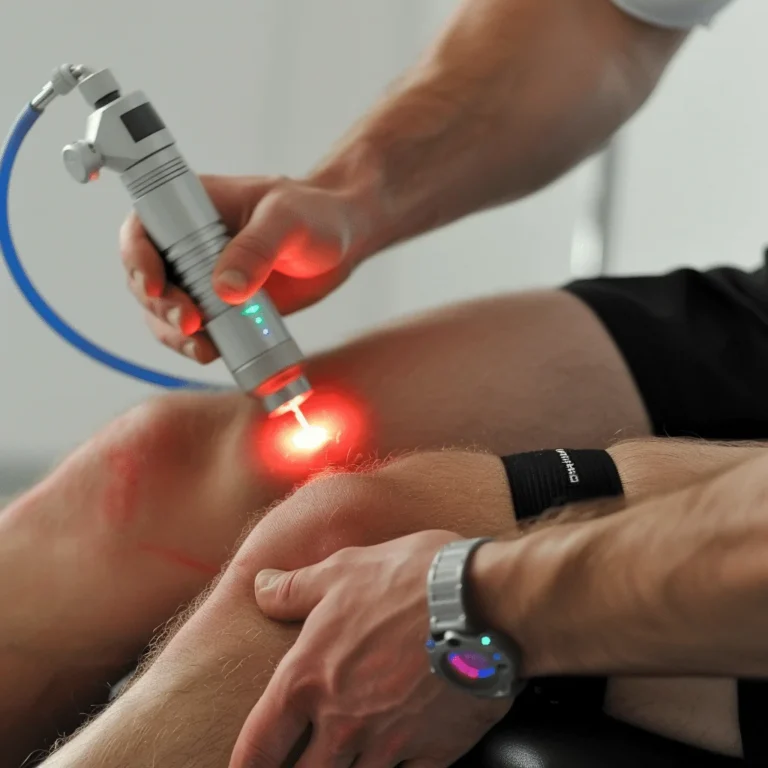
Mechanical readiness includes segmental stabilization, strength restoration around the treated area, correction of the compensatory movement patterns that develop around chronic pain, and rebalancing of load distribution across adjacent joints. This is where FDA-cleared technology, including Emsculpt NEO®, is deployed within the Tower of Power® framework as a physician-directed tool to restore muscle mass and joint stability. Bracing, taping, and targeted movement retraining are integrated where clinically appropriate. This is also where patients searching for muscle strengthening for joint pain, alternatives to knee replacement, or how to avoid joint replacement are describing exactly the work this domain performs, in the language they already use.
Mind and Central Regulation
Chronic musculoskeletal pain alters central pain processing, disrupts sleep architecture, and impairs the coordination between the nervous system and the muscles that stabilize treated areas. A patient can receive excellent biology and excellent mechanical preparation and still underperform if central regulation is not addressed. Mind and central regulation includes support for pain processing pathways, sleep and recovery capacity, and the neurological readiness that governs how the body responds to biologic signaling. This is where FDA-cleared technology, including the ExoMind® system, is integrated within the prehabilitation framework where appropriate.
Metabolic Optimization
Tissue healing is metabolically expensive. Insulin resistance, elevated inflammatory markers, poor mitochondrial function, and chronic stress physiology all reduce the biological environment’s capacity to convert a growth factor signal into a healing response. Metabolic optimization at Precision Regenerative Medicine™ is not general wellness advice. It is procedure-specific tissue preparation, delivered through targeted laboratory evaluation, systemic health review, and physician-directed nutritional and supplement protocols selected for the biological environment the regenerative treatment will encounter.
Tissue Preparation
Tissue preparation addresses the local tissue environment at the target site itself, including nutritional support for collagen synthesis and tissue repair, and integration of additional FDA-cleared technology such as EmVital® where indicated to support tissue quality and local recovery capacity. Tissue preparation is distinct from metabolic optimization: metabolic work prepares the whole body to respond; tissue preparation focuses the response at the site of treatment.
Pre-Procedural Diagnostic Optimization
Pre-procedural optimization is the systematic diagnostic verification that occurs before any biologic intervention is planned. This includes detailed review of prior imaging, correlation of clinical examination findings to imaging findings, systemic health assessment relevant to biologic response, review of prior injection history and its effect on the local tissue environment, and confirmation that the current condition matches the anatomic target being considered for treatment. This phase determines both readiness and candidacy. A patient may be prepared and still not be a candidate for regenerative intervention. Physician-directed pre-procedural optimization identifies this before treatment, not after.
Platelet Dose and Image Guidance: Necessary but Not Sufficient
Prehabilitation does not replace the technical standards of the biology itself. It defines the environment in which those technical standards produce meaningful outcomes.
The published clinical target for intra-articular knee PRP treatment is 10 billion platelets. This target is extrapolated by clinical rationale to the hip and shoulder in physician-owned regenerative practice. Achieving that target depends on two variables that most patients are never told about: the blood draw volume and the platelet recovery capability of the preparation system. A small-volume draw processed through a system with poor platelet recovery cannot reach the target dose regardless of technique. This is one of the reasons that regenerative practices using table-top preparation systems with 15cc or 30cc blood draws will not achieve the same biological output as physician-directed protocols using significantly higher draw volumes and higher-recovery preparation systems.
Spinal applications require significantly higher blood volumes than joint applications. When multiple functional spinal units are targeted in a single procedure, blood draw volumes scale accordingly to deliver adequate biologic dose to each segment. This is one of the reasons spinal regenerative treatment at Precision Regenerative Medicine™ is not delivered through the same preparation protocols used for isolated joint treatment.
Image guidance is the delivery standard that ensures the biology reaches the intended target. Ultrasound is used for soft tissue and superficial joint targets. Fluoroscopy is used for spinal and intraosseous targets. Published systematic review data comparing image-guided to landmark-based injection accuracy demonstrates significant differences at the acromioclavicular joint, biceps tendon sheath, and glenohumeral joint. Placement accuracy is not a technical footnote. It is the difference between the biology reaching its target and missing it entirely.
A high-quality biologic preparation, delivered accurately at an appropriate dose, into a prepared host is the clinical standard. Any component in isolation is insufficient.
The Named Systems That Deliver the Standard
Tower of Power Spine®
Tower of Power Spine® is the physician-directed prehabilitation system I developed for treating the spine as a single mechanical and biological unit. It addresses segmental stability, deep stabilizer activation, core loading mechanics, central pain processing, metabolic optimization, and neuromuscular control before any regenerative intervention is delivered to the spine. The system exists because spinal biologic treatment placed into an unprepared, mechanically dysfunctional spine performs at floor rather than ceiling. Tower of Power Spine® is what allows the biology to perform at the ceiling.
Tower of Power® and the Joint Boost System™
Tower of Power® and the Joint Boost System™ are the physician-directed prehabilitation frameworks for peripheral joint applications, including the knee, hip, shoulder, elbow, and CMC thumb. Each joint has its own prehabilitation architecture within the system, addressing joint-specific loading patterns, kinetic chain integration, tendon quality, capsular mobility, and neuromuscular control. FDA-cleared technology including Emsculpt NEO® is deployed within these systems where appropriate to restore muscle mass and joint stability, particularly in patients working to avoid joint replacement or preparing for surgery in cases where regenerative intervention alone is not appropriate.
The Reframe: What Patients Should Actually Be Asking
Patients evaluating regenerative medicine typically ask “do you offer PRP” or “do you do BMAC” or “what is your platelet count.” These are procedure questions. They generate procedure answers. They do not distinguish a service menu from a clinical standard.
The higher-value question is this: what does the physician do to prepare the tissue and the body before biologic intervention, and is that preparation delivered as a system or as an afterthought?
A practice that has an answer to that question, and can describe the system by name, is operating at a different level than a practice that treats prehabilitation as a set of rehabilitation exercises handed to the patient after the procedure. That distinction is not marketing. It is clinical philosophy, and it determines whether the regenerative medicine you receive performs at the ceiling or floor.
Frequently Asked Questions
What is prehabilitation in regenerative medicine?
Prehabilitation is the physician-directed process of preparing the biological, mechanical, and neurological environment of the body before regenerative treatment is delivered. It includes metabolic optimization, tissue preparation, mechanical stabilization, movement quality restoration, and central regulation support. At Precision Regenerative Medicine™, prehabilitation is delivered through named clinical systems: Tower of Power Spine® for spinal applications and Tower of Power® with the Joint Boost System™ for peripheral joint applications.
How do I prepare for PRP treatment?
Meaningful preparation for PRP treatment requires physician evaluation of your metabolic status, inflammatory burden, mechanical stability around the treated area, and prior injection history. Generic advice to hydrate and rest is not preparation. Prehabilitation at Precision Regenerative Medicine™ is a structured protocol that begins during the initial consultation and continues through the weeks preceding treatment.
Is regenerative medicine an alternative to joint replacement?
For appropriately selected patients, regenerative medicine combined with physician-directed prehabilitation may support pain management, functional preservation, and delay of surgical intervention. Candidacy depends on arthritis grade, joint condition, mechanical stability, biological readiness, and the patient’s overall clinical picture. Grade of arthritis alone does not determine whether regenerative medicine is a viable alternative to surgery. The full prehabilitation and diagnostic evaluation does.
Why does platelet dose matter in PRP treatment?
Platelet concentration is a surrogate for the growth factor, cytokine, and anti-inflammatory mediator load being delivered to the treated tissue. The published clinical target for intra-articular knee treatment is 10 billion platelets, extrapolated clinically to hip and shoulder applications. Achieving this dose depends on both blood draw volume and the platelet recovery capability of the preparation system. Spinal applications require significantly higher volumes, particularly when multiple functional spinal units are treated in a single procedure. Dose is a necessary condition for meaningful biologic response, but it is not sufficient without prehabilitation.
Do you treat patients traveling from California and Nevada?
Yes. Precision Regenerative Medicine™ regularly serves patients traveling from California, Nevada, and across the Southwest for prehabilitation-based regenerative care that is not available in their local market. The consultation and treatment sequence is structured to accommodate travel logistics, with the initial evaluation, prehabilitation planning, and treatment coordinated to minimize the number of trips required.
The Standard Is the Preparation
Regenerative medicine does not fail because the biology is inadequate. It fails because the environment into which the biology is delivered has not been prepared to receive it. Patients who have tried PRP or BMAC elsewhere without meaningful result have often received competent biology into an unprepared host. The biology performed exactly as it was designed to perform. The system around it did not.
Prehabilitation is what changes that result. At Precision Regenerative Medicine™ in Scottsdale, Arizona, prehabilitation is the standard. The biology, delivered accurately at an appropriate dose, into a prepared body, is what regenerative medicine at its ceiling actually looks like.
To request a consultation, complete the contact form at precisionmedprp.com/contactus/ and Dr. Penhollow’s office will follow up with you directly. Precision Regenerative Medicine™ serves patients in Scottsdale, across Arizona, and traveling from California, Nevada, and the Southwest.