
Why Physical Therapy Alone Is Not Fixing Your Back Pain
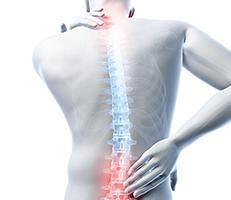
You did everything right. Weeks of physical therapy, stretching, perhaps a round of anti-inflammatories, and yet the pain keeps returning the moment you resume normal activity. If this sounds familiar, you are not imagining it, and you are not alone. For many Arizona patients searching for genuine back pain relief Scottsdale practices can offer, physical therapy alone often falls short. Not because physical therapy is the wrong tool, but because it is one piece of a system that has to be treated as a system.
Understanding why physical therapy can plateau, and what actually comes next, can save you months of frustration.
About the Physician Behind This Article
I am Dr. Tammy J. Penhollow, DO, dual board-certified in Anesthesiology and Pain Medicine and Stanford fellowship-trained in interventional spine and pain. I left insurance-based medicine in 2015 to practice exclusively in regenerative medicine, and I founded Precision Regenerative Medicine™ in Scottsdale, Arizona in 2018. My practice is exclusively autologous, direct pay, and 100 percent image-guided. I treat the spine as an integrated functional unit rather than as a collection of isolated pain generators, and I serve patients throughout Arizona, across the Southwest, and internationally when they can travel to Scottsdale.
Why Physical Therapy Sometimes Plateaus
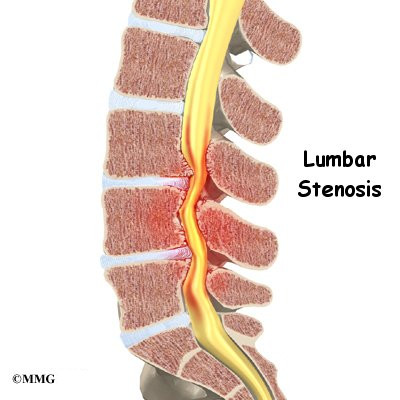
Physical therapy is excellent at building strength, correcting movement patterns, and reducing mechanical strain on the spine. But it has one significant limitation. It cannot directly repair damaged tissue. If your pain is coming from structural pathology, strengthening the muscles around it can help you compensate, but it may not resolve the underlying problem.
Common reasons physical therapy alone plateaus include:
- The root cause is structural rather than muscular
- Ongoing inflammation, so strengthening exercises aggravate rather than help
- The wrong area is being treated because the actual pain generator was never precisely identified
- Compliance and consistency issues, which are common but rarely the full explanation when pain has persisted for months
If you have done the work and you are still hurting, that is a signal to look deeper, not to abandon movement-based care.
The Spine as a Functional Unit
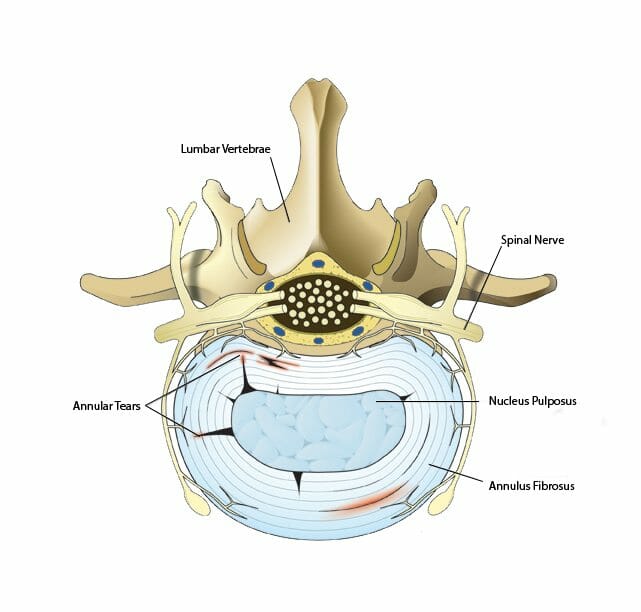
Here is a shift that changes how patients understand back pain. The spine does not function as a series of isolated discs, joints, and muscles. It works as an integrated system called the functional spinal unit, which includes the discs, the facet joints, the sacroiliac joints, the epidural space and neural structures, the spinal ligaments, and the paraspinal musculature. When one structure is compromised, the surrounding structures compensate, and over time the entire unit becomes destabilized.
This is the philosophy behind Tower of Power Spine® at Precision Regenerative Medicine™. Rather than chasing pain from one structure to the next with separate injections, medications, or procedures, treatment addresses the full functional spinal unit as a coordinated system. If you want to understand why treating spine pain one structure at a time falls short, our earlier article on the functional spinal unit covers this in detail.
What Regenerative Care for the Spine Actually Involves?
For patients whose pain persists despite conservative care, non-surgical back pain treatment Scottsdale practices offer often includes regenerative injection therapy as the next reasonable step before surgery is considered. At Precision Regenerative Medicine™, regenerative care for the spine is applied within the functional spinal unit framework, which means treatment may involve any of the structures named above depending on what your evaluation shows.
The two primary autologous tools I use for the spine are platelet-rich plasma (PRP) and bone marrow aspirate concentrate (BMAC). Both are delivered under image guidance, using fluoroscopy or ultrasound depending on the target structure.
PRP has appropriate clinical application in certain presentations of facet joint irritation, sacroiliac joint conditions, ligamentous laxity, and paraspinal soft tissue conditions. BMAC has appropriate clinical application in more advanced structural conditions and in specific presentations where the biology of concentrated bone marrow is what the tissue actually needs. For certain ligament and muscle conditions, I also use prolotherapy, platelet-poor plasma (PPP), or bone marrow aspirate plasma.
Which tool fits your situation, whether either fits, and whether regenerative care is the right approach for you depends on your full clinical picture. That determination requires an evaluation, not an assumption based on your MRI report or your symptoms alone.
I do not use corticosteroids under any circumstances. The evidence on repeated intra-articular and epidural corticosteroid injections and their impact on soft tissue integrity is one of the reasons I built this practice around a different clinical model. Our earlier article on corticosteroid effects covers the mechanisms in detail if you want to understand more.
Prehabilitation: The Clinical Threshold Before Any Regenerative Treatment
Before I treat the spine with orthobiologics, my patients complete a required clinical threshold I call prehabilitation. This is not optional. It is a structured system with multiple domains that determine whether the treatment biologically holds:
- Mechanical stabilization and strengthening of the core, hip, and spinal stabilizers
- Metabolic optimization, including nutrition, blood sugar regulation, and vitamin status
- Tissue preparation to reduce systemic inflammatory load
- Pre-procedural diagnostic optimization to confirm the treatment plan is targeting the right structures
- Central regulation of sleep, stress, and recovery capacity
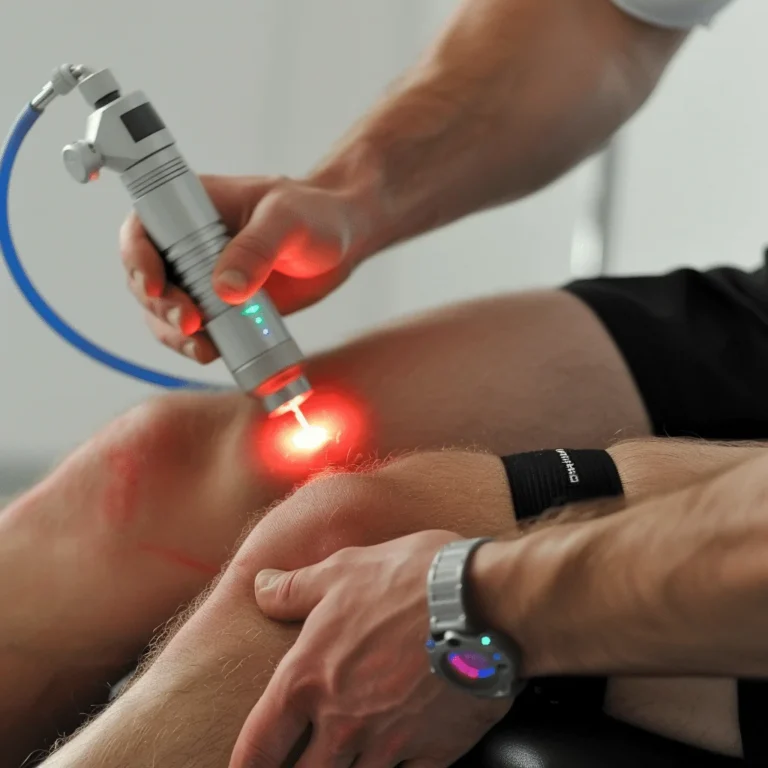
FDA-cleared technology, including Emsculpt NEO®, is often part of the mechanical stabilization component when core and paraspinal weakness is contributing to spinal instability. This is where regenerative medicine done well diverges from regenerative medicine done as a stand-alone injection. The biology cannot repair what the surrounding system cannot support.
Setting Realistic Expectations About Recovery
Recovery from any regenerative treatment is gradual because the goal is to support your body’s own healing biology rather than provide instant symptom suppression. Most patients return to basic daily activities such as walking, driving, sitting at a desk, and working within a few days, though soreness at the injection site is common in the first week. Return to more demanding activity, including gym training, heavier lifting, sports, and higher-impact movement, is more gradual and typically involves activity modification and sometimes bracing for weeks to months while the biology does its work.
Even the best treatment plan can be undercut by daily habits that keep loading stress onto an already irritated spine. Arizona’s active outdoor lifestyle is a benefit for overall health, but certain patterns tend to slow recovery if left unaddressed:
- Prolonged sitting at a desk without regular movement breaks, which increases disc pressure
- Improper lifting mechanics during workouts, yard work, or even carrying groceries
- Sleeping positions that keep the lower back in flexion or extension for hours at a time
- Carrying excess weight through the midsection, which increases load on the lumbar spine
- Ignoring early flare-ups instead of adjusting activity before pain escalates
Addressing these factors alongside professional treatment, rather than relying on injections or physical therapy in isolation, is often what separates temporary relief from a lasting result.
The Bottom Line
Persistent back pain after physical therapy does not mean you are out of options. It means it is time to ask better questions about what is actually happening in your spine and whether it has been treated as an integrated system or as isolated pieces. A precise diagnosis, paired with the right combination of regenerative treatment and rehabilitative care, is often the missing piece between managing your pain and actually resolving it.
If you are considering your options for chronic back pain or non-surgical spine care in Arizona, I welcome the opportunity to evaluate your clinical picture and, if you are a candidate, determine which approach fits your presentation. Precision Regenerative Medicine™ serves patients throughout Arizona, across the Southwest, and from further away when travel to Scottsdale is possible.
To learn more or schedule a consultation, visit precisionmedprp.com/contactus/.
Frequently Asked Questions
Why did physical therapy not fix my back pain?
Physical therapy strengthens muscles and improves movement patterns, but it cannot directly repair structural tissue. If the true source of pain is a structural component within the functional spinal unit, additional treatment may be needed alongside physical therapy. The spine functions as an integrated system, so treating any one piece in isolation often produces temporary results at best.
Is PRP the right regenerative treatment for every spine condition?
No. PRP has appropriate clinical application in certain presentations. BMAC has appropriate clinical application in others. For some ligament and muscle conditions I use additional tools such as prolotherapy, platelet-poor plasma, or bone marrow aspirate plasma. Which tool fits your situation, or whether regenerative care is the right approach at all, requires a full evaluation of your history, imaging, examination, comorbidities, and goals.
How do I know if I need surgery instead of a non-surgical option?
Warning signs that may require surgical evaluation include severe nerve compression, progressive weakness, loss of bladder or bowel control, or structural instability confirmed on imaging. A thorough evaluation clarifies which category you fall into. When surgery is genuinely the right call, a responsible physician will tell you that plainly.
How soon can I return to activity after a spine regenerative treatment?
Most patients return to basic daily activities such as walking, driving, and working within a few days, though soreness at the injection site is common. Return to more demanding activity, including gym training, heavier lifting, sports, and higher-impact movement, is more gradual and typically involves activity modification and sometimes bracing for weeks to months. Your specific timeline depends on the treated structures, the severity of the underlying condition, your baseline activity level, and how well you have prepared for the procedure. A structured return-to-activity plan is part of the post-procedural care I build with every patient.
Can I combine regenerative treatment with physical therapy?
Yes. In fact, structured rehabilitation is a required component of the treatment system at Precision Regenerative Medicine™. Regenerative treatment addresses the biological environment. Rehabilitation rebuilds the mechanical stability that keeps the improvement in place. Neither alone tends to produce durable results in the spine.