
Why Scottsdale’s Active Adults Are Exploring Options Before Shoulder Surgery
Golf, tennis, pickleball, hiking Camelback. An aching shoulder can sideline an active Arizona lifestyle fast. If a rotator cuff issue or chronic shoulder pain has you facing a surgical recommendation, it is worth knowing that PRP for shoulder pain Scottsdale patients ask about is increasingly considered as a first step, not a last resort, before committing to an operating room date.
This is not about avoiding necessary care. It is about understanding the full range of options for a joint that, unlike a hip or knee, often responds well to non-surgical intervention when the clinical picture is right and the treatment is properly matched.
About the Physician Behind This Article
I am Dr. Tammy J. Penhollow, DO, dual board-certified in Anesthesiology and Pain Medicine and Stanford fellowship-trained in interventional spine and pain. I left insurance-based medicine in 2015 to practice exclusively in regenerative medicine, and I founded Precision Regenerative Medicine™ in Scottsdale, Arizona in 2018. My practice is exclusively autologous, direct pay, and 100 percent image-guided. I serve patients throughout Arizona, across the Southwest, and internationally when they can travel to Scottsdale.
Why the Shoulder Is Different From Other Joints
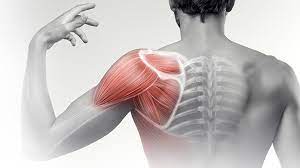
The shoulder is the most mobile joint in the body, which also makes it uniquely dependent on soft tissue integrity for stability and function. Unlike the knee or hip, much of shoulder pain stems from soft tissue rather than bone-on-bone arthritis. This matters because:
- Soft tissue conditions often respond well to regenerative approaches when appropriately selected, since the goal is to support tendon, ligament, and cartilage healing directly
- Partial rotator cuff conditions frequently do not require surgical repair, particularly when the clinical picture supports a regenerative approach
- Overuse and degenerative tendon changes, common in tennis, golf, and swimming, are frequently labeled as “needing surgery” when a full evaluation would identify other options
Understanding what is actually driving your shoulder pain is the single most important factor in deciding your next step.
The Shoulder Is a Functional Unit
Regenerative care for the shoulder is often framed publicly as an injection into a painful joint. That framing misses most of what actually determines outcomes.
The shoulder is a functional unit that includes the glenohumeral joint, the acromioclavicular joint, the labrum, the subacromial space, the rotator cuff, the biceps tendon, and the surrounding soft tissues. When one structure is compromised, the surrounding structures compensate, and the entire unit becomes affected over time. Regenerative care done well does not treat “the shoulder.” It treats the specific structures within the functional shoulder unit that are contributing to your pain, matched to the biology available for repair in each of them.
This is the philosophy behind the Joint Boost System™ at Precision Regenerative Medicine™, which integrates prehabilitation, physician-selected regenerative treatment, and structured post-procedural care under one physician-directed plan. It is how I approach the shoulder, the knee, and other joints where regenerative care is a legitimate option.
The Regenerative Tools I Use
At Precision Regenerative Medicine™, the two primary autologous tools I use are platelet-rich plasma (PRP) and bone marrow aspirate concentrate (BMAC). Both are delivered under image guidance, using ultrasound for soft tissue and superficial joint targets.
PRP is a concentrated preparation of your own blood platelets, processed on-site. PRP has appropriate clinical application in certain soft tissue conditions of the shoulder and in earlier-stage joint conditions.
BMAC uses a concentrate of your own bone marrow, drawn under image guidance from the iliac crest and processed to concentrate the cellular components. BMAC has appropriate clinical application in more advanced joint conditions and in specific structural presentations where the biology of concentrated bone marrow is what the tissue actually needs.
Which tool fits your situation, whether either fits, and whether regenerative care is even the right approach for you depends on your full clinical picture. That determination requires an evaluation, not an assumption based on your MRI report or your Google search.
I do not use corticosteroids under any circumstances. Repeated intra-articular and peritendinous corticosteroid injections have documented effects on cartilage integrity and on tendon quality, and one of the reasons I built this practice around a different clinical model is that corticosteroid injections in the shoulder can accelerate the very deterioration a patient is trying to prevent. If you want to understand more about that decision, our earlier article on corticosteroid effects covers the mechanisms in detail.
Is This an Alternative to Shoulder Surgery in Arizona for You?
Not every shoulder condition is a good fit for regenerative treatment, and an honest physician will tell you that upfront. Patients considering an alternative to shoulder surgery Arizona practices offer typically have:
- A clinical picture that regenerative biology can meaningfully address, based on the whole evaluation
- Structural changes that have not caused irreversible functional loss requiring reconstruction
- A goal of remaining active without long-term reliance on oral pain medication or corticosteroid injections
- No active infection, blood disorder, or other condition that would make regenerative therapy inappropriate
A proper evaluation is the only way to determine both candidacy and which approach fits your presentation. Not every shoulder that presents to my office is a candidate for regenerative care. When it is not, I tell patients directly and refer them for the care that is appropriate.
Prehabilitation Before Any Regenerative Treatment
Before I treat the shoulder with orthobiologics, my patients complete a required clinical threshold I call prehabilitation. This is not optional. It is a structured system with multiple domains that determine whether the treatment biologically holds:
- Mechanical stabilization and strengthening of the scapular stabilizers, rotator cuff, and surrounding musculature
- Metabolic optimization, including nutrition, blood sugar regulation, and vitamin status
- Tissue preparation to reduce systemic inflammatory load
- Pre-procedural diagnostic optimization to confirm the treatment plan is targeting the right structures
- Central regulation of sleep, stress, and recovery capacity
FDA-cleared technology, including Emsculpt NEO®, is often part of the mechanical stabilization component when scapular and postural muscle weakness is contributing to shoulder instability.
Getting an Accurate Diagnosis Before You Decide
Because so many different structures can cause shoulder pain, imaging alone often is not enough. A thorough evaluation typically combines:
- MRI or ultrasound imaging to visualize soft tissue, rather than relying on X-ray alone, which shows bone but not tendons or the labrum
- My own diagnostic ultrasound assessment of the affected structures
- A hands-on functional exam, testing strength and range of motion in specific patterns tied to individual muscles and tendons
- A conversation about your goals, whether that is returning to competitive tennis, playing golf without pain, or simply reaching a top shelf without discomfort
- A clear, honest explanation of your options, including when regenerative treatment is unlikely to be the right fit
Patients who skip this step and move straight to treatment, of any kind, often end up frustrated when results do not match expectations, simply because the underlying problem was never fully identified.
Setting Realistic Expectations About Recovery
Recovery from any regenerative treatment is gradual because the goal is to support your body’s own healing biology rather than provide instant symptom suppression. Most patients return to basic daily activities such as light work, driving, and desk tasks within a few days, though soreness at the treatment site is common in the first week. Return to more demanding activity, including gym training, overhead sports, swimming, and higher-impact movement, is more gradual and typically involves activity modification and often bracing or sling use for weeks to months while the biology does its work.
The Bottom Line
A shoulder pain diagnosis does not have to mean an automatic trip to the operating room. For the right candidate, with the right regenerative tool matched to the right clinical picture, non-surgical treatment offers a legitimate step to explore first, one that respects both the biology of the tissue and your desire to get back to the activities that make Arizona living worth it.
If you are considering your options for shoulder pain, rotator cuff conditions, or non-surgical shoulder care in Arizona, I welcome the opportunity to evaluate your clinical picture and, if you are a candidate, determine which approach fits your presentation. Precision Regenerative Medicine™ serves patients throughout Arizona, across the Southwest, and from further away when travel to Scottsdale is possible.
To learn more or schedule a consultation, visit precisionmedprp.com/contactus/.
Frequently Asked Questions
Can PRP fully repair a rotator cuff condition?
That depends entirely on the clinical picture. For certain rotator cuff conditions where the tissue biology is still viable, regenerative treatment can support meaningful improvement. For complete, retracted tears with significant tissue loss, surgical repair may still be necessary for structural healing. A full evaluation determines which category applies to you.
How soon can I return to golf or tennis after shoulder regenerative treatment?
Return to sport varies significantly by the treated structures, the severity of the underlying condition, and your baseline activity level. Most patients follow a phased return over weeks to months, guided by a structured rehabilitation program that is part of the post-procedural care I build with every patient. A one-size-fits-all timeline does not reflect how the biology actually works.
Is shoulder regenerative treatment painful?
Most patients report a sensation similar to a standard injection, with mild soreness for a day or two afterward. Image guidance helps ensure the treatment is placed precisely, and local anesthetic is used to improve comfort.
What is the difference between PRP and cortisone for shoulder pain?
Cortisone is a symptom-suppressive treatment that can reduce inflammation temporarily. Repeated corticosteroid injections have documented effects on tendon integrity, including increased risk of tendon rupture, and on cartilage integrity, including accelerated cartilage loss and progression of osteoarthritis. PRP takes a different approach entirely. It harnesses your body’s own anti-inflammatory and reparative factors to support reduction in pain and improvement in function, without the tissue-degrading effects associated with repeated corticosteroid use. This is one of the reasons I do not use corticosteroids under any circumstances at Precision Regenerative Medicine™.
How do I know if my shoulder pain needs surgery instead?
Signs that may point toward a surgical evaluation include significant weakness, inability to lift the arm, a large or retracted tear on imaging, or lack of improvement after a full course of conservative treatment. A thorough evaluation clarifies which category applies. When surgery is genuinely the right call, a responsible physician will tell you that plainly.